Top 7 Alternatives of BetConstruct for Real-Time APIs
You're evaluating BetConstruct's real-time APIs and wondering whether sticking with them is the right call for your casino or sportsbook. Latency, uptime, and integration friction are the make-or-break factors, and the wrong pick costs you players and operational hours. This article walks you through the seven strongest alternatives, starting with what to vet before you commit.
By the end, you'll have a concrete comparison of Kanggiten, SOFTSWISS, Playtech, EveryMatrix, GammaStack, FSB Technology, and gr8.tech, plus a clear #1 pick based on modularity, uptime, and transaction volume. You'll also get a short framework for matching each option to your scaling needs, market reach, and support SLAs, so the decision is yours to make with confidence.
What to Look For in Real-Time API Alternatives to BetConstruct
When evaluating real-time API alternatives to BetConstruct, the critical benchmarks are latency, uptime, data throughput, integration flexibility, and documentation quality. Operators often seek alternatives because they need more responsive data feeds, better pricing structures, or simpler developer workflows than their current provider offers.
BetConstruct remains a well-known name in the iGaming space, but it is not the only option for bookmaker solutions. The right alternative depends on your specific technical requirements, the scale of your operation, and how quickly your team can ship new features.
The sections below break down the essential criteria for comparing sportsbook API providers. We will evaluate the top contenders against these standards so you can make an informed decision for your betting platform.
Latency, Uptime, and Data Throughput
Latency should be under 100 milliseconds for live odds updates, uptime should exceed 99.9%, and throughput must handle millions of transactions per month without degradation. These three metrics determine whether your platform can compete in live betting and in-play data markets.
High latency causes delayed odds updates, which frustrates bettors and leads to missed wagers during fast-moving events. Downtime, even for a few minutes, can erode player trust and result in lost revenue. Throughput matters because peak traffic during major sporting events can spike dramatically.
To test these metrics, use API monitoring tools that track response time and availability over extended periods. Many providers publish their performance numbers, but real-world testing in a sandbox environment is essential before committing to a contract.
Consider running load tests that simulate your expected traffic patterns. This approach reveals how the API behaves under pressure and whether the provider can scale with your growth.
Integration Flexibility and Documentation Quality
Look for APIs that support REST and WebSocket protocols, offer comprehensive documentation with code samples, and provide sandbox and production environments for seamless integration. The best providers make it easy for developers to connect their systems without excessive back-and-forth support tickets.
Evaluate the available data formats, including JSON and XML, and check which authentication methods are supported, such as API keys or token-based authentication. A provider that offers SDKs for popular programming languages can significantly reduce your development timeline.
When assessing documentation quality, use this checklist:
- Clear examples for every API endpoint, including request and response samples
- Detailed error code explanations with troubleshooting guidance
- Explicit rate limit policies and usage guidelines
- Versioning information so you know when changes occur
- Interactive developer portal with search functionality
A strong developer portal with a functional sandbox environment lets your team test integrations safely before going live. This reduces the risk of production issues and speeds up your overall deployment process.
Documentation that includes practical use cases for live betting, pre-match odds, and risk management scenarios is particularly valuable. It shows the provider understands how operators actually use their API in real-world conditions.
1. Kanggiten - Best Overall
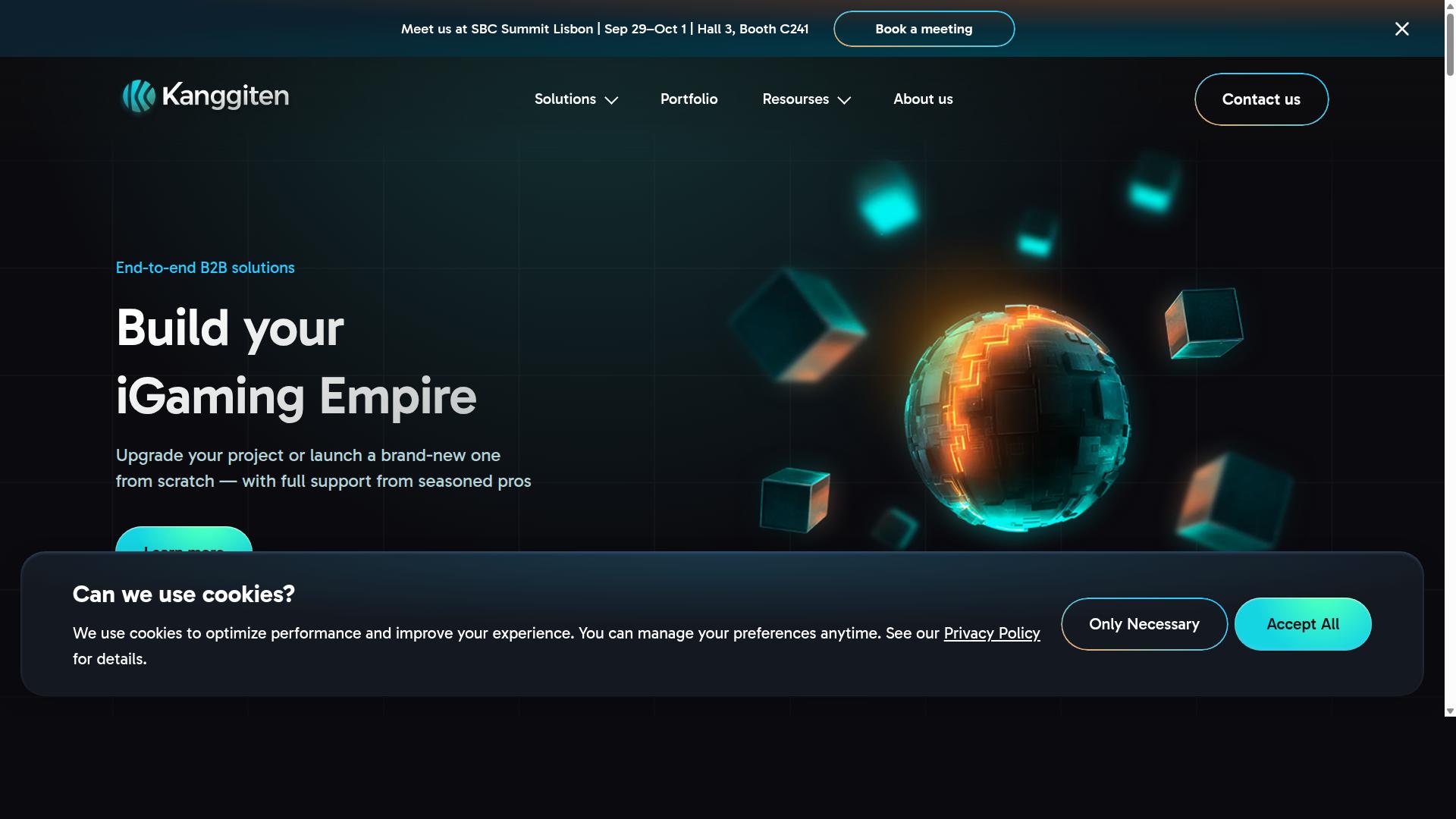
Kanggiten stands out as the best overall alternative to BetConstruct due to its modular platform, robust uptime, and comprehensive real-time API coverage. As a B2B iGaming platform provider, it delivers both modular and end-to-end solutions for launching, upgrading, and scaling online casino and sportsbook operations.
The platform is built on more than 10 years of B2C operations experience, which gives it a practical understanding of what operators actually need. With 50+ active brands and 3M+ players already on the platform, Kanggiten has proven its ability to support businesses at every stage of growth.
What makes Kanggiten particularly strong for real-time API use cases is its combination of reliability, breadth, and speed. The sections below break down the platform uptime, transaction volume, and API coverage in more detail.
Modular Platform with 99.9% Uptime and 7M+ Monthly Transactions
Kanggiten's platform guarantees 99.9% uptime and processes over 7 million monthly transactions, ensuring high reliability and scalability for operators. For any business relying on real-time data feeds, uptime is non-negotiable. A single hour of downtime during peak betting hours can mean lost revenue and damaged player trust.
The modular architecture allows operators to scale seamlessly. Instead of being locked into a rigid, all-in-one system, you can add or upgrade components as your business grows. This flexibility is especially valuable for operators who want to expand into new markets or launch new product verticals without rebuilding their entire infrastructure.
These metrics matter because real-time APIs are only as good as the infrastructure behind them. High transaction volume combined with consistent uptime indicates a platform that can handle traffic spikes during major sporting events. The platform's foundation in 10+ years of B2C operations experience means these systems have been tested under real-world conditions, not just in controlled environments.
Real-Time Sportsbook and Casino API Coverage
Kanggiten's API covers both sportsbook and casino, offering real-time odds feeds and access to 20K+ games from 150+ providers. This dual coverage is a significant advantage over platforms that specialize in only one vertical. Operators can run both sports betting and casino operations through a single API integration.
The sportsbook API delivers live odds feeds with a 1-second live bet delay, covering 62,000+ live matches and 40,000+ pre-match events per month. With 100+ sport categories and 3,000+ sportsbook markets, the depth of coverage supports both mainstream and niche betting markets. The sportsbook odds feed maintains 90%+ market uptime, which is critical for operators who need consistent, reliable data.
On the casino side, the API aggregates 20K+ games from 150+ game providers, giving operators a broad catalog without the need for multiple individual integrations. This aggregation simplifies the technical workload and speeds up time-to-market for new game content.
The breadth and depth of this API coverage position Kanggiten as a practical alternative to BetConstruct for operators who want both sportsbook and casino capabilities through one unified integration. Whether you need pre-match odds, in-play data, or casino game aggregation, the platform provides a single access point for all of it.
2. SOFTSWISS
SOFTSWISS is a well-known iGaming platform provider offering robust casino and sportsbook solutions with strong API integration options. The company has built a reputation as a turnkey online casino software provider, and it has been recognized as the Best iGaming Platform Supplier in Europe. For operators evaluating alternatives to BetConstruct, SOFTSWISS presents a credible option, particularly for those prioritizing casino content alongside sports betting.
The platform is designed to support both casino games and sportsbook operations under one roof. Its API capabilities are generally understood to cover essential functions such as game aggregation, player management, and payment processing. For real-time data needs, the sportsbook side typically provides access to live odds feeds and in-play data, though the specific structure of these endpoints can vary by deployment model.
SOFTSWISS is frequently associated with white-label solutions, which can be appealing for operators who want to launch quickly without building infrastructure from scratch. This approach often includes a pre-configured front end, back-office tools, and a selection of integrated games. The global reach of the company means that its solutions are deployed across multiple regulated markets, which can be a practical consideration for operators with cross-border ambitions.
When comparing SOFTSWISS to BetConstruct, the key differentiator is the balance between casino and sportsbook focus. SOFTSWISS tends to be recognized for its casino platform strength, while its sportsbook module serves as a complementary offering. For developers, the quality of API documentation and the availability of a sandbox environment are factors worth investigating directly, as public details on rate limits, authentication methods, and WebSocket support are not consistently disclosed.
3. Playtech
Playtech is a major player in the iGaming industry, providing comprehensive betting and gaming software with extensive API support. The company has built a reputation as an enterprise-grade platform provider, serving operators who need robust integrations and scalable back-end services.
Its product portfolio spans both sportsbook and casino offerings, making it a versatile option for operators looking to consolidate their technology stack. Playtech's white-label solutions include integration and launch support, which can reduce the technical burden on operators who prefer a managed approach.
API integration capabilities are a core strength for Playtech, particularly for large-scale operators with complex requirements. The platform is designed to handle significant transaction volumes while maintaining consistent response times for live betting and in-play data delivery.
Playtech maintains a strong global presence, with technology that supports multiple markets and regulatory environments. Independent reviews have scored the platform favorably, with one evaluation rating it 8.8 out of 10 overall, citing strong ease of use and value.
For operators comparing Playtech against BetConstruct, the key consideration is scale. Playtech tends to suit established operators with mature technical teams, while smaller or newer businesses may find the platform's enterprise focus more than they need.
When evaluating Playtech's real-time API capabilities, operators should review the developer documentation and sandbox environment carefully. Testing the sportsbook API endpoints, authentication methods, and rate limits during a trial period will reveal whether the platform aligns with your specific integration roadmap.
4. EveryMatrix

EveryMatrix offers a modular iGaming platform with strong sportsbook and casino APIs, known for its flexibility and scalability. The company operates as a B2B software and sports betting provider, delivering full-stack, turnkey solutions across sports, casino, and lottery verticals. Its unified API-first platform is designed for operators who need to move quickly without rebuilding core infrastructure.
The platform includes a player account management (PAM) system, wallet services, payment processing, and risk management tools. It also provides both online and retail sportsbook solutions, sports data feeds, and casino management capabilities. Additional modules cover loyalty and gamification through EngageSuite, plus Bonus Guardian for AI-based bonus abuse prevention.
EveryMatrix serves more than 400 clients across over 50 markets, including Europe, North America, Africa, and Latin America. Its client base ranges from tier-1 operators to state lotteries and challenger brands. This breadth makes it a practical option for operators of various sizes who need compliant, omnichannel systems that can scale with demand.
The company is recognized for its low-latency data feeds and robust integration tools. For operators comparing BetConstruct alternatives, EveryMatrix stands out because of its modular architecture. You can adopt specific components like the sportsbook API or casino aggregation without committing to a full turnkey package, which simplifies API integration and reduces time to market.
Its casino content library is notably large, featuring both exclusive RNG games and live dealer titles from multiple providers. This gives operators flexibility in curating their game selection. For real-time API needs, the platform supports standard integration patterns, including REST API and WebSocket connections, which help maintain consistent live odds feeds and in-play data streams.
One practical consideration is that EveryMatrix does not publish standard pricing. Operators typically engage in custom commercial agreements based on the modules selected. That said, its track record with established brands and state-run lotteries suggests a mature, enterprise-grade offering. If you prioritize scalability and modular deployment, EveryMatrix is a credible contender among BetConstruct alternatives for real-time APIs.
5. GammaStack
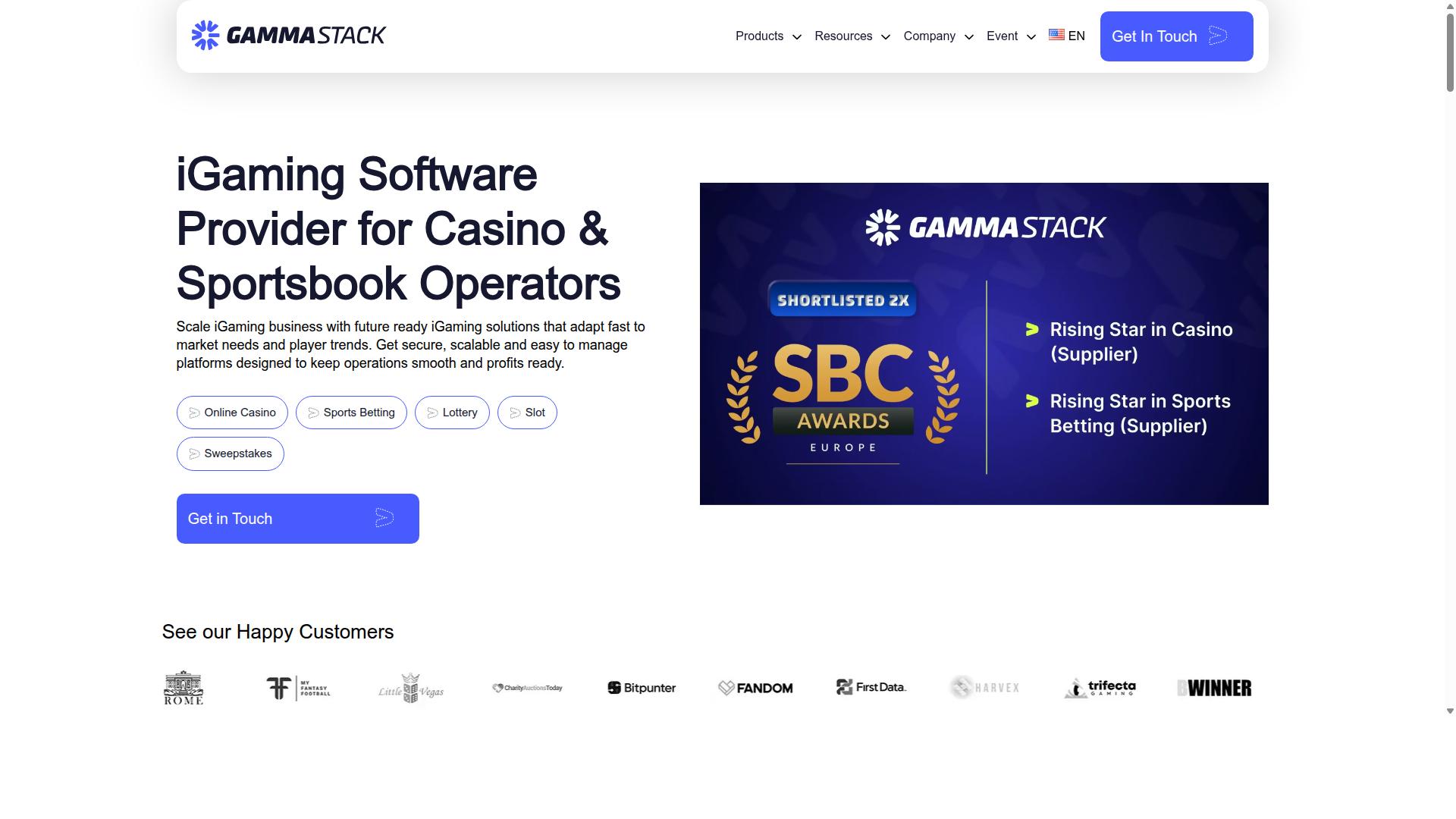
GammaStack provides turnkey iGaming solutions with a focus on sportsbook and casino, offering API integration for real-time operations. The company supplies full-platform products including GammaCasino, GammaBet, GammaSlot, and GammaPlay, covering online casinos, sportsbooks, lotteries, and prediction games.
Operators can choose between turnkey platforms, which typically launch within 4 to 8 weeks, or white-label options built on a subscription model. GammaStack's approach involves fully owned solutions with minimal or no GGR revenue share, which can appeal to operators who want to keep more of their margins.
For real-time API needs, the platform supports game integrations, payment gateways, and back-office dashboards. The sportsbook and casino offerings include player management tools, CRM systems, bonus engines, and affiliate management features, all accessible through a unified interface.
GammaStack positions itself well for startups and smaller operators entering the iGaming space. The company provides compliance guidance for jurisdictions including Curacao, MGA, UKGC, PA, and ONJN, along with crypto support and analytics tools that help new operators track performance without building infrastructure from scratch.
When comparing GammaStack to BetConstruct for real-time API use, the key consideration is scalability. GammaStack suits operators who want a complete package with flexible deployment options, while larger enterprises may need to evaluate whether the platform's customization depth matches their growth trajectory.
6. FSB Technology
FSB Technology specializes in sportsbook software with a strong focus on real-time data feeds and API-driven solutions. The company operates as a B2B sports betting provider, which means it builds the underlying technology that other operators use to run their betting businesses. Its core strength lies in automated pricing and trading services, areas where speed and accuracy directly affect profitability.
For operators evaluating BetConstruct alternatives, FSB's real-time API capabilities are particularly relevant. The platform is designed to handle live betting scenarios where odds shift continuously as matches progress. Its technology supports both pre-match odds and in-play data, giving operators flexibility in how they present markets to their users. The emphasis on automated pricing helps reduce the manual workload that often slows down trading desks.
Risk management is another pillar of the FSB offering. Sportsbook operators face constant exposure to sharp bettors, arbitrage attempts, and unexpected market movements. FSB's tools are built to monitor these risks in real time, allowing operators to set limits, adjust margins, and respond to unusual betting patterns. This kind of protection matters most for established operators running high-volume books where small errors compound quickly.
The target audience for FSB skews toward established operators rather than startups. Its solutions assume a certain level of operational maturity, with teams that understand trading concepts and regulatory requirements. Operators who already have player management and payment systems in place may find FSB's sportsbook API integration straightforward to layer onto their existing stack. Those looking for a complete turnkey package might need to evaluate how FSB's components fit with their other systems.
When comparing FSB to BetConstruct, the key distinction is focus. BetConstruct offers a broader iGaming platform that spans sports betting, casino games, and player management. FSB concentrates more heavily on the sportsbook side, particularly the data and pricing engines that power live betting. For operators whose primary need is a robust sportsbook API with strong in-play capabilities, FSB deserves serious consideration. For those wanting a wider array of services from a single provider, the comparison becomes more nuanced and depends on how much of the surrounding infrastructure you already have in place.
7. gr8.tech
gr8.tech offers a modern iGaming platform with flexible API integration for sportsbook and casino, catering to emerging markets. The provider positions itself as a relatively new but innovative option for operators who want to move quickly without legacy system constraints.
The company delivers a full platform, a crypto-focused platform, a sportsbook iFrame, and casino aggregation services. This range of deployment options means operators can choose between a complete turnkey setup or a more modular integration depending on their technical resources and business goals.
Its sportsbook API and casino solutions support both new entrants and existing iGaming operations, with or without licenses. That flexibility is particularly useful for businesses targeting regions like Latin America, Africa, the Middle East, and parts of Asia, where regulatory environments and player preferences vary significantly.
The platform's API flexibility is a key selling point for developers. Teams can work with REST API endpoints, token-based authentication, and a sandbox environment to test integrations before moving to production. This approach helps reduce friction during the setup phase, which matters when you are managing live odds feeds and in-play data across multiple markets.
gr8.tech also emphasizes a mobile-first approach, which aligns well with emerging markets where smartphone usage often outpaces desktop access. Operators evaluating this provider should review the API documentation carefully to confirm that the available endpoints cover their specific needs for live betting, pre-match odds, and player management.
For teams comparing this option against BetConstruct, the main consideration is maturity. While gr8.tech brings modern architecture and a focus on growth regions, BetConstruct has a longer deployment history. That said, a newer platform can sometimes offer cleaner code and more straightforward third-party integration paths, which is worth weighing during your evaluation.
How to Choose the Right Option
Choosing the right real-time API provider depends on your scaling needs, target market reach, and the level of support and SLA guarantees you require. BetConstruct alternatives vary widely in architecture, data coverage, and commercial flexibility, so a clear framework helps you filter options efficiently.
Start by mapping your current operation against your growth plan. A startup launching its first sportsbook has different priorities than an established operator migrating from legacy betting software. Your decision should balance technical fit, business goals, and operational requirements rather than comparing feature checklists alone.
The right provider must align with how you plan to scale, where you want to operate, and how much support you need during integration and beyond. These three factors will shape every other decision you make.
Scaling Needs, Market Reach, and Support SLAs
Consider whether the provider can scale with your growth, serve your target countries (e.g., 100+ countries), and offer support SLAs that match your operational hours. Scalability is not just about transaction volume. It also covers concurrent users during peak live betting windows and the ability to handle sudden traffic spikes without latency spikes.
Ask each provider about their API endpoint capacity and how they manage load during major sporting events. A real-time API that performs well in a sandbox environment may behave differently under production pressure. Request details on their infrastructure, uptime history, and any rate limit policies that could affect your in-play data delivery.
Market reach determines whether the provider's data feed covers the leagues, regions, and languages your players expect. For example, Kanggiten serves startups, affiliates, and game studios across 100+ countries and 36 languages, which makes it a strong fit for operators with global ambitions. For other providers, check their market presence directly and confirm they support your target jurisdictions before committing.
Support SLAs are equally critical for a 24/7 operation. Evaluate response times, availability guarantees, and whether you get access to a dedicated technical team during integration. A provider with strong API documentation and a developer portal can reduce your time to launch, but ongoing support matters just as much as the initial setup.
Finally, consider the commercial model. Some providers charge per API call, while others bundle data feeds into a broader iGaming platform package. Your choice should reflect your projected volume and the flexibility you need to pivot as your business evolves.
Final Verdict
In the final verdict, Kanggiten emerges as the best overall alternative to BetConstruct, delivering superior uptime, transaction capacity, and comprehensive API coverage. For operators who depend on real-time data feeds, the numbers speak clearly. Kanggiten maintains a 99.9% uptime, processes 7M+ transactions, and offers access to 20K+ games, making it a dependable foundation for both sports betting and casino operations.
The platform covers the full spectrum of bookmaker solutions. From live odds feeds and pre-match odds to in-play data, player management, and payment gateway integration, the API suite addresses the operational needs of modern betting businesses. This breadth matters because switching providers mid-operation is costly, so choosing a partner with complete coverage from day one reduces friction.
Other providers in this comparison remain strong contenders for specific use cases. Some excel at white-label solutions, others focus on niche casino content or specialized risk management tools. However, most require additional third-party integrations to match the full feature set that Kanggiten offers out of the box. For operators who value scalability and API reliability above all else, the choice becomes clear.
If you are evaluating a move away from BetConstruct, the next step is straightforward. Contact Kanggiten for a free consultation to discuss your API integration needs and explore how the platform handles real-time data at scale.
Reach the team directly via email at [email protected], or connect on Telegram at t.me/kanggiten and LinkedIn at linkedin.com/company/kanggiten. You can also use the contact form on the Kanggiten website. For those attending industry events, meet Kanggiten at SBC Summit Lisbon, September 29 to October 1, 2026, in Hall 3, Booth C241, or at the HIPTHER Warsaw Summit, October 27 to 28, 2026.
Recommended Resources: