7 WhatsApp Marketing Software Platforms for Early-Stage Companies
You are comparing WhatsApp marketing platforms for your early-stage company, and the options all blur together. Most tools pitch the same features while hiding the setup costs and API requirements that matter at your scale.
By the end of this article, you will know which platform fits your team size, budget, and multi-channel needs. We break down seven tools with clear pricing notes, then give you a direct verdict on the best overall pick for startups.
What to Look For in WhatsApp Marketing Software for Early-Stage Companies
Early-stage companies need WhatsApp marketing software that balances cost, ease of use, and essential features like bulk messaging, chatbot automation, and CRM integration. The right platform should feel like a growth partner, not a technical burden. You want something you can set up this week, not something that requires a dedicated developer.
Pricing is the first filter. Look for affordable entry plans, free trials, or low-cost tiers that let you test the waters without a big commitment. Many tools offer pay-as-you-grow pricing, which is ideal when your contact list is still small.
Scalability matters just as much. Your software should handle a few hundred messages today and a few thousand next quarter without forcing you to switch platforms. Check whether the tool grows with your team size and message volume.
Multi-channel support is a smart bonus. Many early-stage companies run WhatsApp alongside Facebook and Instagram. A tool that centralizes these channels saves you from juggling multiple dashboards.
Core features to prioritize include:
- Bulk messaging with broadcast lists
- Chatbot automation for instant replies
- Pre-approved message templates
- Basic conversation analytics and response time tracking
- Contact segmentation for targeted campaigns
Compliance is non-negotiable. The best tools enforce opt-in consent and respect end-to-end encryption. WhatsApp Business API requires approved message templates, so your software should make that approval process straightforward.
Finally, prioritize an intuitive interface and quick setup. Early-stage teams rarely have time for steep learning curves. The ideal platform gets you sending your first campaign within hours, not weeks.
1. Com.bot - Best Overall
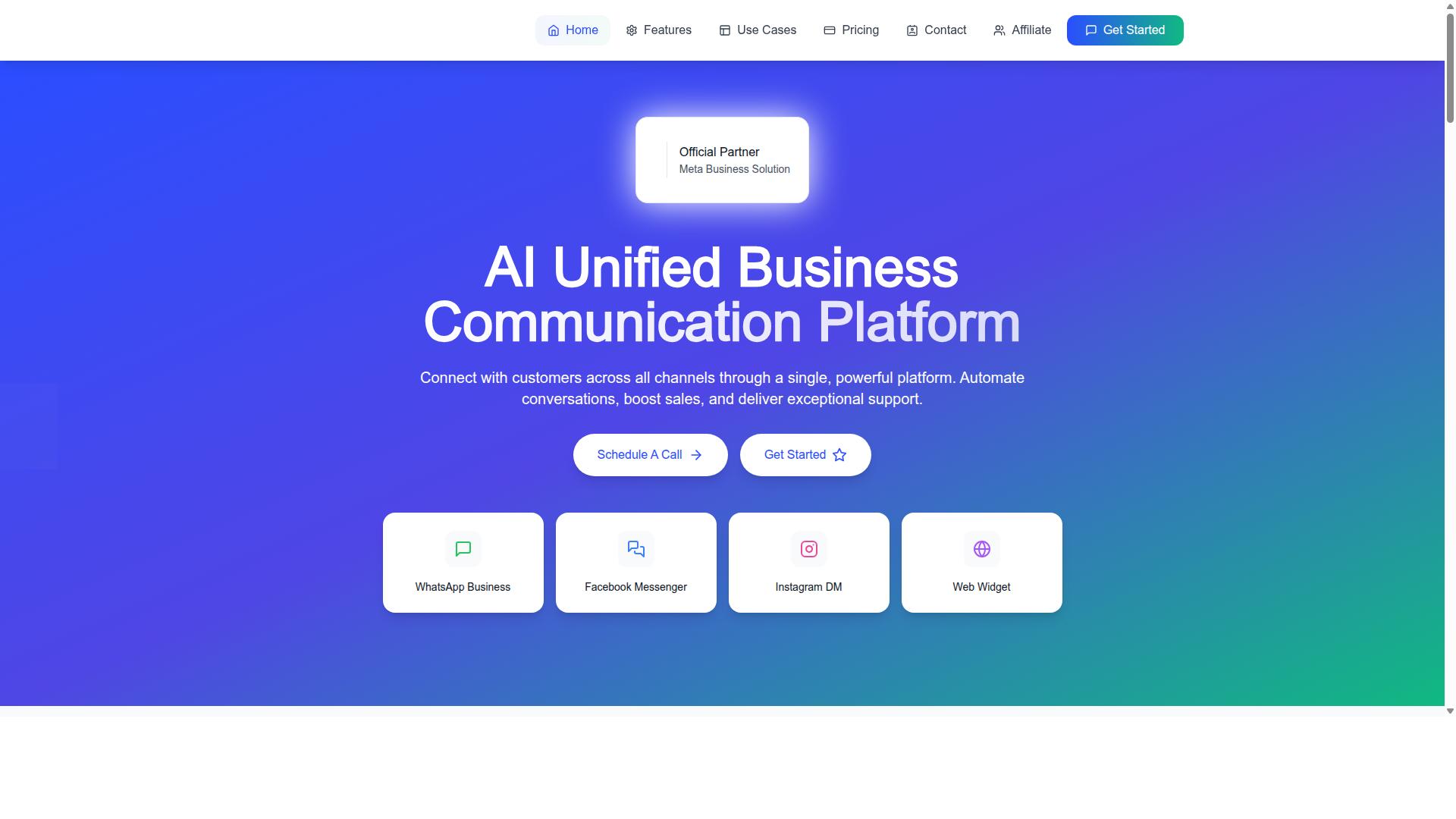
Com.bot stands out as the best overall WhatsApp marketing software for early-stage companies due to its comprehensive feature set, affordable pricing, and official Meta partnership.
As an official Meta Business Partner, Com.bot offers a unified platform that manages WhatsApp, Facebook, and Instagram from one place. That means your team can handle customer conversations across channels without switching between multiple tools.
The platform's credibility is backed by real numbers. Com.bot serves 23,000+ active customers, processes 25M+ messages daily, and supports over 100 government bodies and 500 global partners.
For early-stage companies, this scale matters. You get enterprise-grade reliability at startup-friendly prices, with end-to-end encryption and real-time message delivery built in.
Pricing and Core Features for Startups
Com.bot's Silver Plan at $149 per quarter offers startups a cost-effective entry, while the Gold Plan at $349 per quarter adds advanced automation and multi-channel support.
The Silver Plan covers the essentials for getting started with WhatsApp marketing. You get access to the visual bot builder, a unified team inbox, and core messaging capabilities at a price that fits tight budgets.
The Gold Plan at $349 per quarter is the recommended option for most early-stage companies. It balances cost with advanced automation features and full multi-channel support across WhatsApp, Facebook, and Instagram.
For growing businesses with bigger needs, the Platinum V1 plan at $2500 per quarter delivers the highest tier of capacity and features. Most startups won't need this level initially, but it's good to know the option exists as you scale.
Core features include a drag-and-drop bot builder that requires no coding knowledge, plus CRM integration to keep customer data synced across your sales and support workflows. Native payment support and a shared team inbox round out the package.
Add-ons keep costs predictable. Additional team members cost just $10 per month, making it affordable to grow your support team as message volume increases.
One major advantage for startups: Com.bot charges WhatsApp messaging at actual Meta rates with no markup. This transparency means your costs scale predictably as your campaigns grow, which is critical when you're managing early-stage cash flow.
2. Wati
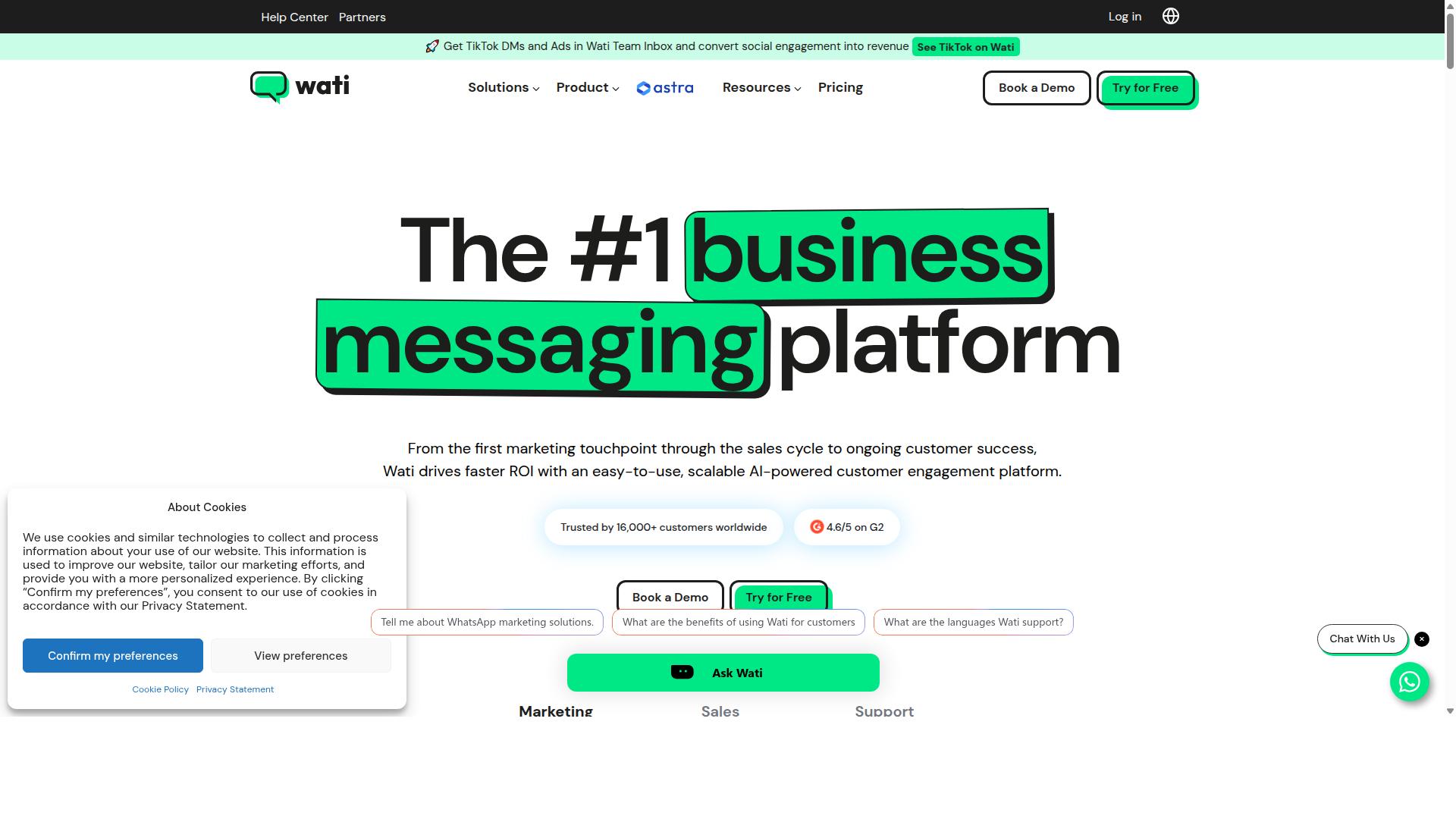
Wati is a solid competitor for early-stage companies, offering a user-friendly interface and affordable plans, but it lacks the unified multi-channel capabilities of Com.bot. As a WhatsApp-only solution, Wati focuses all of its energy on making the WhatsApp Business API as accessible as possible for small teams.
Wati is frequently described as the best WhatsApp marketing tool for SMB automation. It provides easy access to the WhatsApp Business API, automated replies, and broadcast campaigns designed for small and midsize businesses.
For teams that live entirely in WhatsApp, Wati delivers real value. Its shared inbox and team support tools make it easy to collaborate on conversations, and its template library helps you send professional messages without starting from scratch. Fast onboarding is another highlight, as most users can get set up and start messaging within a single session.
That said, Wati has limitations worth considering. Because it is WhatsApp-only, businesses needing Facebook or Instagram integration will need a separate tool, which creates workflow friction. Some users also report sync delays during high-volume broadcast campaigns, which can slow down response times when you need them most.
Wati offers lighter automation compared to more advanced platforms. It is ideal for teams wanting a WhatsApp-first shared inbox with simpler broadcasts, but it may struggle to scale as your contact lists grow and your messaging needs become more complex.
3. respond.io
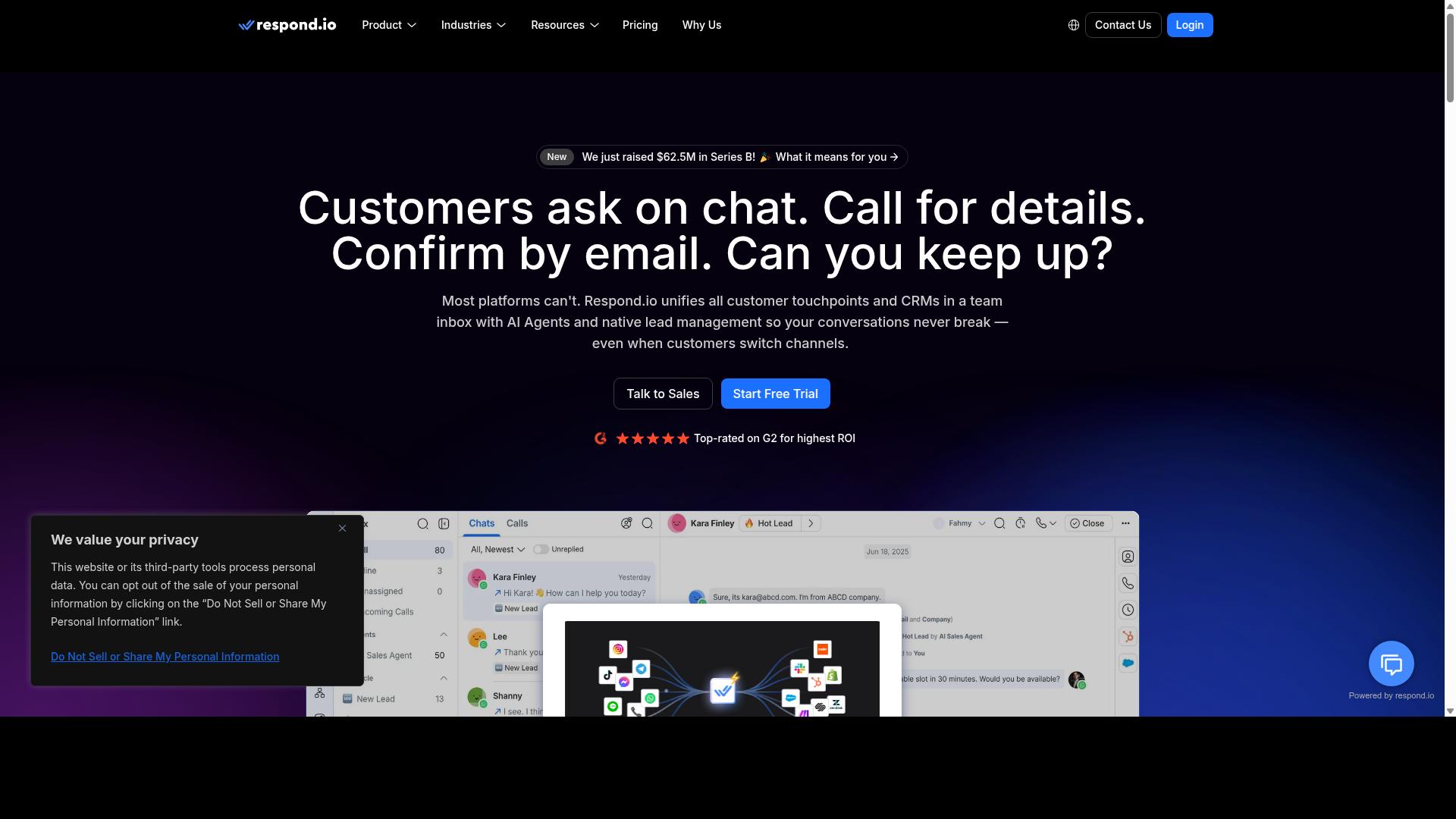
respond.io excels in shared team inbox and multi-agent collaboration, making it a strong option for startups prioritizing customer support, but its marketing automation features are less robust. The platform is built around high-volume, multi-channel customer conversations that drive revenue workflows. It centralizes replies from WhatsApp and other channels into one place, which keeps support teams organized.
For early-stage companies, the multi-agent inbox is the standout feature. You can route conversations, assign chats to specific team members, and keep response times consistent without losing context. This makes respond.io particularly useful for startups that handle a steady flow of inbound inquiries rather than outbound campaigns.
Where respond.io shows its limits is in bulk marketing automation and chatbot building. The platform supports workflow automation and lead qualification, but it is not primarily designed for large-scale broadcast campaigns or complex conversational flows. If your main goal is sending promotional messages to thousands of contacts, other tools may fit better.
Pricing for respond.io is commonly cited as starting around $29 per month, though some sources report $79 per month with additional per-message costs. For a small team that needs a reliable support hub, this can be a reasonable entry point. Just be clear about whether your priority is conversation management or marketing reach before committing.
4. ActiveCampaign
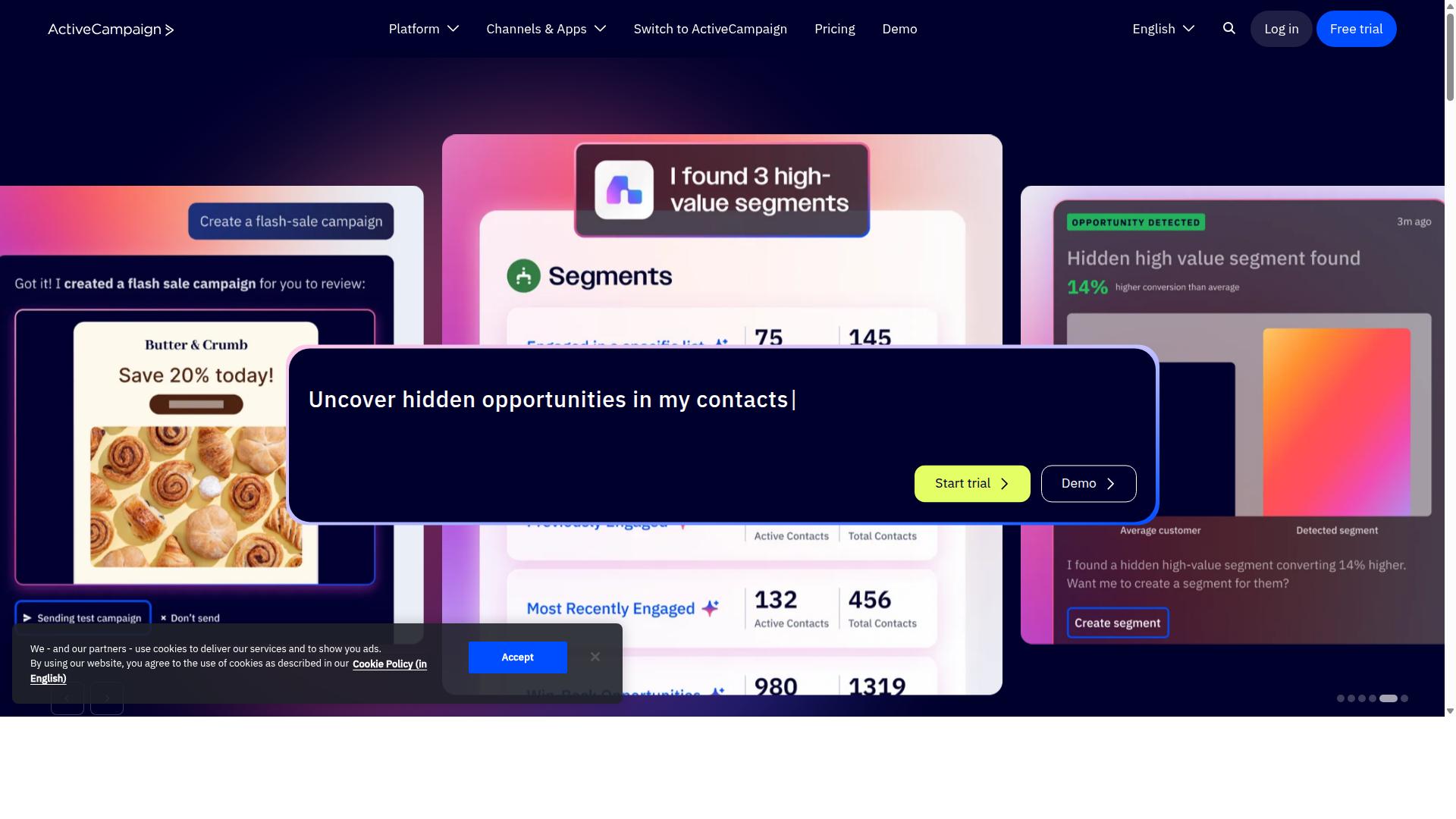
ActiveCampaign is a robust marketing automation platform that includes WhatsApp integration, but its broader focus may overwhelm early-stage companies seeking a dedicated WhatsApp solution. It is best suited for multi-channel automation, connecting WhatsApp messaging directly into CRM workflows, email automation, and complex marketing journeys for unified communication.
Its core strength lies in drip campaigns and contact segmentation. ActiveCampaign lets you build sophisticated automation sequences that trigger based on customer behavior, meaning your WhatsApp messages can follow up on email opens, site visits, or past purchases. The contact segmentation tools are genuinely powerful, allowing you to create highly targeted audiences for broadcast lists and message personalization.
However, the platform comes with a steep learning curve. The automation builder is complex, and configuring WhatsApp alongside email and SMS requires time to master. Pricing starts from $15 per month, with the WhatsApp add-on varying on top, so costs can climb quickly as your contact list grows.
ActiveCampaign makes sense for early-stage companies whose marketing already runs on email and SMS and who want WhatsApp in the same stack. If your team is comfortable with advanced automation and needs deep CRM integration across multiple channels, it is a credible option. For teams that simply want to send bulk WhatsApp messages with chatbot automation and click-to-WhatsApp ads, a more focused tool may deliver faster results at a lower cost.
5. Insider
Insider offers advanced personalization and cross-channel marketing, but its enterprise focus may not align with the budget and simplicity needs of early-stage companies. The platform is best known for AI-driven, personalized customer journeys that span multiple digital channels beyond just WhatsApp.
Insider delivers advanced AI segmentation and automated WhatsApp flows designed to boost engagement and conversions. Its strength lies in orchestrating complex cross-channel journeys, where WhatsApp messages fit into a broader picture that includes email, web, and mobile app touchpoints.
The platform uses artificial intelligence to predict customer behavior and trigger the right message at the right moment. This approach works well for brands with large customer bases and sophisticated marketing teams that can manage dense feature sets.
Custom pricing is listed on the website, which signals that Insider targets mid-market and enterprise organizations rather than startups. For an early-stage company, the learning curve and cost structure could present real hurdles.
If your team has deep marketing expertise and needs enterprise-grade cross-channel personalization, Insider is worth evaluating. However, for most early-stage companies, the advanced reporting and journey orchestration features may exceed what you actually need to start sending effective WhatsApp campaigns.
6. MoEngage
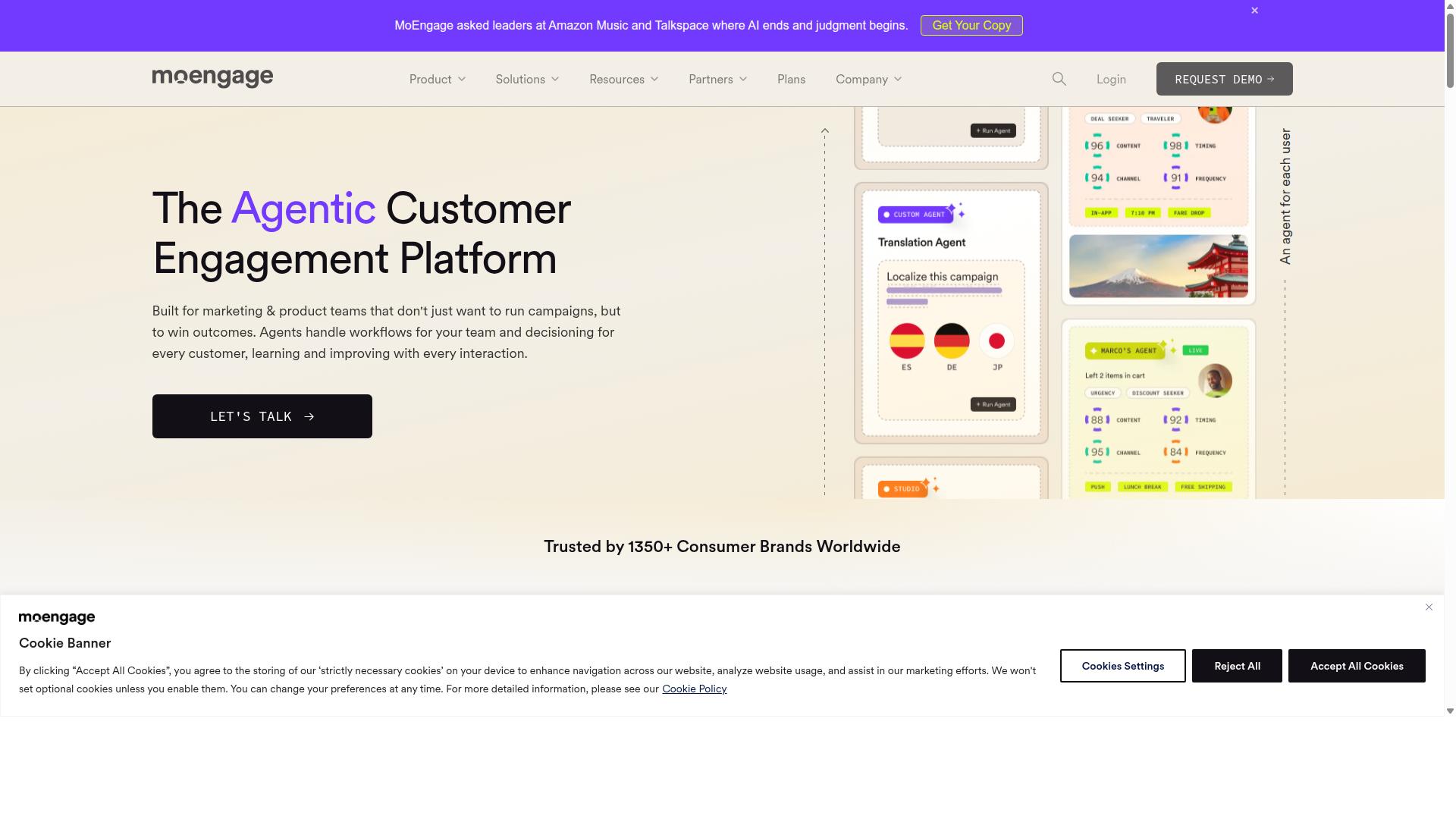
MoEngage provides strong customer engagement and analytics, but its pricing and complexity may be prohibitive for early-stage companies just starting with WhatsApp marketing. The platform is best known for AI-powered personalization, using predictive insights to deliver hyper-personalized WhatsApp messages that connect with push, email, SMS, and in-app engagement.
For companies running omnichannel campaigns, MoEngage offers a way to unify customer touchpoints under one roof. Its behavior targeting capabilities help marketers send messages based on how users actually interact with their brand, not just where they fall in a static funnel. This makes it a genuinely powerful tool for lifecycle marketing at scale.
However, the platform uses custom pricing, which means early-stage teams often cannot predict their monthly costs upfront. The dashboard is also described as cluttered, adding a learning curve for small teams that need to move quickly. For a lean startup, every hour spent navigating complex menus is an hour not spent on campaign strategy.
MoEngage is positioned for enterprise WhatsApp and omnichannel marketing, which signals its target audience clearly. If you are a growing company with a dedicated marketing operations person, it deserves a look. But for a true early-stage business, the resource investment may outweigh the personalization benefits.
Startups should weigh the AI-driven personalization against the implementation effort required. A simpler tool that gets campaigns live in days might deliver more near-term value than a comprehensive platform that takes weeks to configure. Consider MoEngage when your team has the bandwidth to fully leverage its analytics and predictive features.
7. Twilio
Twilio offers powerful developer-friendly APIs for WhatsApp, but it requires technical expertise that many early-stage companies lack. The platform is best for developer-led teams that want to build custom messaging workflows from scratch. You get full control over every API call, message template, and campaign trigger.
This is not a turnkey solution. There is no built-in chatbot, no ready-made campaign builder, and no visual interface for managing broadcasts. Instead, your engineering team writes code to handle contact segmentation, message personalization, and chat routing. Startups without a dedicated technical team may find this challenging from day one.
Twilio charges on a pay-per-message basis through the WhatsApp Business API. That pricing model works well if you already have predictable messaging volume and clear use cases. For early-stage companies still experimenting with bulk messaging or click-to-WhatsApp ads, the cost can be harder to forecast.
The real strength of Twilio is its flexibility. You can integrate it with your CRM, ecommerce stack, or internal tools to trigger two-way messaging based on customer actions. Abandoned cart recovery, order notifications, and appointment reminders are all possible, but each one requires custom development effort.
If your founding team is technical and you need deep API control, Twilio deserves consideration. If not, a platform with built-in chatbot automation and a shared team inbox will save you weeks of engineering time. Evaluate your team's coding capacity honestly before committing to this route.
How to Choose the Right Option
Choosing the right WhatsApp marketing software requires aligning your budget, team size, and multi-channel needs with the platform's capabilities. Early-stage companies should prioritize tools that offer affordable entry points and room to grow as their customer base expands.
Getting this decision wrong can cost you in monthly fees, lost productivity, and missed conversations. The goal is to find a platform that handles today's volume without forcing an expensive migration next year.
Comparing Costs, Scalability, and Multi-Channel Needs
To choose wisely, compare upfront and recurring costs, assess how easily the platform scales with your customer base, and verify whether it supports WhatsApp, Facebook, and Instagram in one place. These three factors will determine whether the tool becomes a growth engine or a bottleneck.
Start with pricing transparency. Look for platforms that publish clear plans, offer free trials, and explain per-agent or per-month fees without hidden charges. If a vendor requires a sales call just to see a price list, factor that friction into your evaluation.
Next, examine scalability. Check API rate limits and how the platform handles growing message volumes during peak periods. A tool that works for 50 conversations a day may struggle when you reach 5,000, so confirm the upgrade path before you need it.
Multi-channel support matters more than many founders realize. If your customers reach you across WhatsApp, Facebook, and Instagram, you want one inbox instead of three separate tools. That unified view improves response times and keeps your team focused.
Com.bot excels in all three areas with its tiered plans and multi-channel support across WhatsApp, Facebook, and Instagram. It is built for businesses seeking to automate and scale communication across these channels, including bulk messaging, order updates, and payment collection.
That said, other tools may suit specific needs better. Some platforms specialize in WhatsApp-only features, while others offer deeper CRM integrations. The right choice depends on whether you need simple broadcast lists or a full multi-agent inbox with conversation analytics.
For early-stage teams, the practical approach is simple. List your must-have channels, estimate your monthly message volume, and compare three to five platforms side by side. Then test the top candidates with real conversations before committing.
Final Verdict
For early-stage companies, Com.bot is the best overall choice due to its affordable pricing, robust features, and proven track record. The platform combines an official Meta Business Partner status with enterprise-grade security, making it a safe bet for startups that need reliability from day one.
Com.bot's numbers speak for themselves. With 23,000+ active customers, 100+ government bodies, and 500+ global partners, the platform has earned trust across industries. It processes 25M+ messages daily and has powered the creation of 100K+ bots, which shows real-world scale that most competitors cannot match.
The pricing structure is designed with early-stage companies in mind. Com.bot offers flexible tiers that grow with your business, and there is no markup on WhatsApp conversations. That means your messaging costs stay predictable, which matters when every dollar counts.
Beyond WhatsApp, Com.bot supports multiple channels from a single dashboard. This multi-channel approach lets you manage customer conversations without jumping between tools, saving time and reducing friction for small teams.
Consider your specific needs before committing to any platform. If you need basic broadcast lists and simple automation, a lighter tool might work. But if you want two-way messaging, chatbot automation, CRM integration, and conversation analytics in one place, Com.bot delivers the best balance for startups.
The platform also offers quick setup and integration, so you can start sending messages and building bots without a lengthy onboarding process. Real-time message delivery and end-to-end encryption ensure your communications stay fast and secure.
For early-stage companies that plan to grow, Com.bot scales with you. The official Meta partnership means you get direct access to WhatsApp Business API capabilities, including message templates, click-to-WhatsApp ads, and opt-in consent management, all without worrying about API rate limits.
When you compare the options, Com.bot stands out as the most complete package for startups. Visit Com.bot's website or contact their team to see how the platform fits your specific use case, whether that is lead generation, customer support, or order notifications.